Returning Customer ?
Don't have an account ?
Showing all 2 products
Excellent sound absorption, reducing noise and echo.
Ideal for offices, classrooms, hospitals, and auditoriums.
Naturally non-combustible.
Helps slow the spread of fire, enhancing building safety.
Resistant to sagging over time.
Can withstand normal wear and tear in commercial and residential settings.
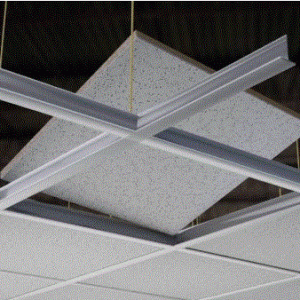
Easy to handle and install in suspended ceiling grids.
Reduces structural load compared to heavier ceiling materials.
Certain tiles are treated to resist humidity and prevent mold or mildew growth.
Available in different textures, patterns, and colors.
Can provide a modern or traditional look depending on design choice.
Individual tiles can be replaced if damaged.
Cleanable with a vacuum or damp cloth.
Provides some level of insulation, helping with energy efficiency.
Tiles in suspended ceilings can be easily removed for access to electrical, plumbing, and HVAC systems.
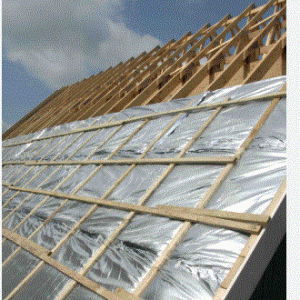
Here are the key features of roof insulation:
Reduces heat loss in cold climates and heat gain in hot climates.
Provides consistent indoor temperatures.
Lowers heating and cooling costs.
Reduces reliance on HVAC systems.
Prevents condensation, dampness, and mold growth.
Some materials include vapor barriers for added protection.
Materials like mineral wool and certain foams are fire-retardant.
Enhances building safety.
Reduces external noise penetration.
Improves indoor sound comfort.
Designed to last for decades without significant loss of performance.
Resistant to pests, water, and decay (depending on material).
Some insulation types are eco-friendly, recyclable, or made from natural fibers.
Reduces carbon footprint by lowering energy usage.
Suitable for pitched roofs, flat roofs, and attic spaces.
Available in rolls, boards, spray foam, or loose-fill forms.