

Description
Roof insulation is the process of adding a thermal barrier to the roof structure to reduce heat transfer between the inside of a building and the outside environment. It helps keep indoor spaces cooler in hot weather and warmer in cold weather, while also lowering energy bills.
Common Types of Roof Insulation:
-
Fiberglass Batt Insulation
-
Affordable and widely used.
-
Easy to install between rafters.
-
Requires proper sealing to avoid gaps.
-
-
Spray Foam Insulation
-
Expands to fill gaps and cracks.
-
Provides excellent air sealing.
-
More expensive but very energy efficient.
-
-
Rigid Foam Boards (XPS, EPS, Polyiso)
-
High insulation value per inch.
-
Suitable for flat and sloped roofs.
-
Good for both above and below the roof deck.
-
-
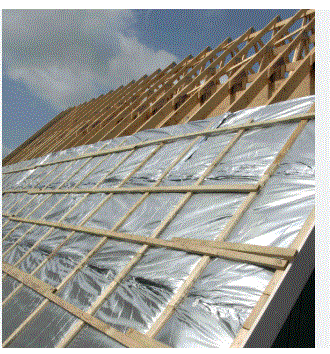
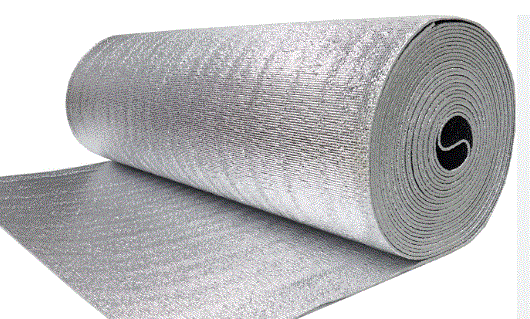
Reflective or Radiant Barriers
-
Made of aluminum foil sheets.
-
Reflect heat rather than absorb it.
-
Effective in hot climates.
-
-
Mineral Wool (Rockwool/Slag wool)
-
Fire-resistant and soundproof.
-
Good thermal properties.
-
Heavier than fiberglass.
-
Benefits of Roof Insulation:
-
Reduces energy costs by 20–40%.
-
Improves comfort by maintaining indoor temperatures.
-
Reduces condensation and moisture buildup.
-
Increases building lifespan by protecting the roof structure.
-
Adds acoustic insulation against outside noise.
👉 Do you want me to focus on residential homes (like attic insulation) or commercial/industrial buildings (flat roof insulation systems)?+254725106822
There are no reviews yet.